
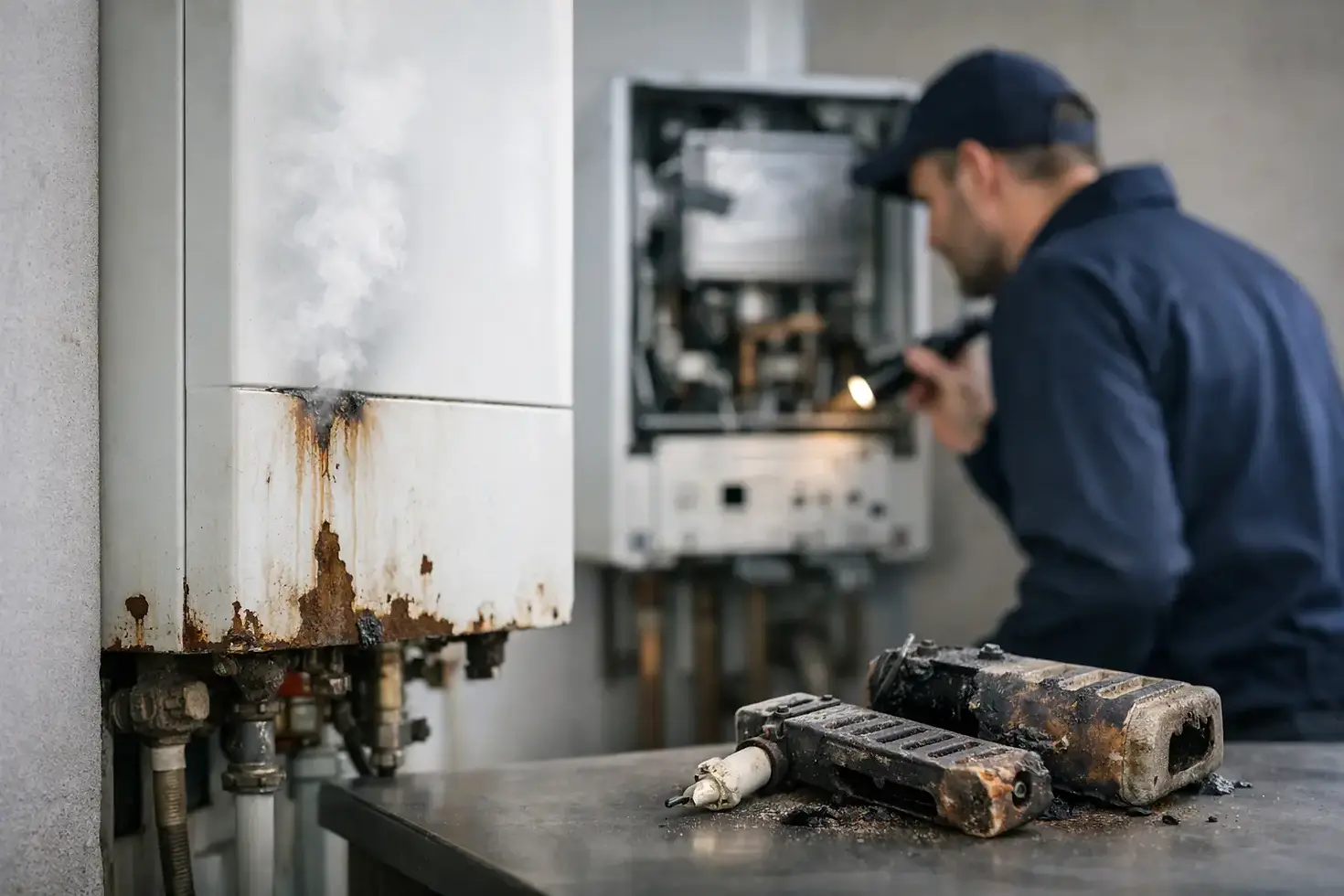
9 Signs Your Boiler Needs Replacing

Boilers rarely fail at a convenient time. It is usually during a cold spell, when you need heating and hot water most, that an older unit starts making odd noises, losing pressure or cutting out altogether. If you have been putting up with repeat faults, rising energy bills or patchy performance, these are often clear signs your boiler needs replacing rather than repairing yet again.
When boiler problems stop being a one-off
A single fault does not always mean the boiler is finished. Many issues can be repaired quickly and sensibly, especially on newer boilers with readily available parts. The problem is when breakdowns become part of the routine.
If you are calling an engineer every few months, resetting the boiler regularly, or working around a heating system that never feels fully reliable, the cost is not just financial. It is the hassle, the uncertainty and the risk of being left without heating at the worst possible moment. At that stage, replacement is often the more practical long-term decision.
9 signs your boiler needs replacing
1. Your boiler is getting old
Age matters. Most boilers can last well when they are serviced properly, but they do not go on forever. If your boiler is around 10 to 15 years old, or older, it is worth taking a serious look at its condition and efficiency.
Older boilers are more likely to suffer wear in key components, and replacement parts can become harder to source. Even if the boiler still works, it may be costing you more to run than a modern condensing model. For homeowners planning other improvements, such as a kitchen renovation or a wider heating upgrade, replacing an ageing boiler can make good sense before it becomes an emergency.
2. Repairs are becoming more frequent
One repair can be reasonable. Two in a year might still be manageable. But if faults keep coming back, you are usually seeing a wider decline rather than bad luck.
A boiler with repeated issues often has more than one tired component. Replacing one part may only buy a short stretch of time before something else fails. This is especially true on older heat-only systems, back boilers and heavily used combi boilers that have simply done years of service.
There is no universal rule for when repairs become uneconomical, because it depends on the age of the boiler, the type of fault and the likely life left in the system. Still, if you are spending money regularly without restoring full confidence in the boiler, replacement should be on the table.
3. Your energy bills are rising without a clear reason
A gradual increase in energy costs can come from tariff changes, weather or higher household use. But if your usage habits have not changed much and your bills keep climbing, an inefficient boiler may be part of the problem.
Older boilers generally work harder to produce the same result. As internal parts wear and efficiency drops, more fuel is needed to heat your home and water. You may not notice the decline day to day, but your bills often tell the story.
A modern condensing boiler is designed to make much better use of the fuel it burns. The savings will vary from property to property, and not every replacement pays back at the same rate, but improved efficiency is often one of the strongest reasons to upgrade.
4. The heating is uneven or the hot water is unreliable
If some rooms warm up slowly, radiators are inconsistent, or your hot water turns unpredictable, the boiler may no longer be performing as it should. In some cases the issue sits elsewhere in the system, such as sludge in the pipework, a failing pump or setup problems with controls. But the boiler itself can also be the root cause.
This is where proper diagnosis matters. Not every comfort issue means replacement is needed straight away. Sometimes a system clean, pump replacement or controls upgrade can make a big difference. But if the boiler is older and struggling alongside other system faults, fitting a new boiler as part of a wider upgrade is often the cleaner and more cost-effective route.
5. Strange noises are becoming normal
Boilers are not silent, but they should not sound like they are arguing with themselves. Banging, whistling, gurgling or vibrating noises can point to limescale, trapped air, pump issues, kettling or worn internal parts.
Some of these problems are repairable. Others are warning signs that the boiler is under strain. If unusual noises are new, getting them checked early can prevent bigger trouble. If they have been going on for a while and the boiler is already older, the noises may be part of a broader decline rather than a simple isolated fault.
6. It is leaking or losing pressure often
A boiler that loses pressure now and then should not be ignored. A visible leak, however small, is an even clearer sign that something needs attention. Seals, valves and internal components can all deteriorate over time.
Sometimes the fix is straightforward. Sometimes it is not. The key issue is whether the leak or pressure loss is a one-off repair on a generally sound boiler, or another symptom in a longer list of faults. If multiple parts are wearing out, replacing the boiler can be more sensible than chasing each problem individually.
7. Parts are difficult or expensive to get hold of
This is one of the less obvious signs your boiler needs replacing, but it matters. Once a boiler model becomes dated, manufacturers may stop producing certain parts, or the available parts become costly and slow to obtain.
That creates two problems. First, a simple repair can turn into a drawn-out job. Second, you can end up paying a premium just to keep an old boiler limping on. For landlords, busy households and short-let property owners, downtime itself is a cost. Reliability and quick turnaround matter just as much as the repair bill.
8. The pilot light or flame behaviour is not right
On boilers with a visible pilot light or flame, changes in colour or behaviour should always be checked by a qualified engineer. A healthy flame is typically blue. If it appears yellow or orange, there may be a combustion issue that needs urgent attention.
Not every combustion fault means full replacement, but safety always comes first. If a boiler is both ageing and developing combustion-related issues, replacing it is often the better option than investing further in a unit that may already be nearing the end of its service life.
9. Your boiler no longer suits your home
Sometimes the boiler still works, but it is the wrong setup for the property. You may have an old regular or heat-only boiler taking up unnecessary space, or a system that struggles to meet the needs of a renovated home.
If you are changing the layout, adding a bathroom, removing an old cylinder arrangement or modernising the whole heating setup, a replacement can improve both performance and practicality. Upgrading from an outdated system to a modern condensing combi boiler is often about more than replacing a fault. It is about making the home work better.
Repair or replace - how to decide
The right answer depends on the balance between cost, reliability and future plans. If the boiler is fairly modern, the fault is isolated and the repair is sensible, repairing may be the right call. If the boiler is older, inefficient and showing several of the signs above, replacement is usually the safer investment.
It also depends on timing. Planned replacement is far less stressful than emergency replacement. When you have time to assess the property properly, you can choose the right boiler size, consider improvements to controls or system layout, and have the work carried out with less disruption.
For homeowners in Manchester and surrounding areas, this can be particularly useful in the run-up to winter, when demand rises and nobody wants to be making rushed decisions in a cold house.
What to do if you think your boiler is on the way out
Start with a proper assessment rather than guessing. A qualified heating engineer can tell you whether the issue is repairable, whether parts are still viable, and whether your current boiler is still fit for purpose.
Ask practical questions. How old is the boiler? What is the likely repair cost? Are more faults expected? Will a new boiler improve efficiency or free up space? Could the wider system benefit from upgrades at the same time? Clear answers make the decision much easier.
If replacement is the sensible route, good planning matters. The best result is not just a new box on the wall. It is a boiler and system setup that suits your property, hot water demand and future plans, installed neatly and with as little disruption as possible.
A boiler does not need to fail completely before you act. Quite often, the smartest move is replacing it when the warning signs are clear and you still have the breathing space to do it properly.


Comments