
When Should a Boiler Be Replaced?
- Kayhan Mojganfar
- Apr 8
- 6 min read

A boiler rarely fails at a convenient time. It usually starts with little problems - a pressure drop here, strange noises there, hot water that comes and goes - and before long you are asking the bigger question: when should a boiler be replaced rather than repaired? For most homeowners, the answer is not based on age alone. It comes down to reliability, efficiency, parts availability and whether the boiler is still right for the home.
When should a boiler be replaced instead of repaired?
A repair makes sense when the fault is isolated, the boiler is in otherwise good condition and the cost is proportionate. Replacement becomes the better option when faults are becoming regular, the boiler is inefficient, or one repair is simply delaying the next one.
That matters because boilers are not just another appliance. When your heating and hot water are affected, the disruption is immediate. If you are dealing with breakdowns every winter, or you are nervous every time the temperature drops, the real cost is not only the engineer’s invoice. It is the inconvenience, the time off work and the uncertainty.
As a rule, many boilers start to move into replacement territory at around 10 to 15 years old. Some last longer if they have been properly installed and serviced, while others become troublesome sooner. A well-maintained older boiler can still be serviceable, but age does raise the risk of declining efficiency and harder-to-source components.
The clearest signs your boiler may need replacing
If your boiler has broken down once in several years, that is not unusual. If it has become a repeat problem, the picture changes. Frequent call-outs often point to wider wear across the system rather than one-off bad luck.
Rising repair bills are one of the strongest signs. A fan this year, a pump next year, then a printed circuit board after that - the costs start stacking up. At some point, spending more money on an ageing boiler stops being sensible, especially if there is no guarantee another part will not fail shortly afterwards.
Poor efficiency is another common reason to replace. Older non-condensing boilers use more fuel to produce the same heat as a modern condensing model. Even some older condensing boilers can be noticeably less efficient than current units. If your gas bills are climbing but your usage has not changed much, your boiler may be part of the problem.
Then there is performance. If your radiators take longer to warm up, hot water temperatures are inconsistent or the boiler struggles to keep up in colder weather, it may no longer be operating as it should. Sometimes that can be improved with system cleaning or component replacement. Sometimes it is a sign the appliance is simply nearing the end of its useful life.
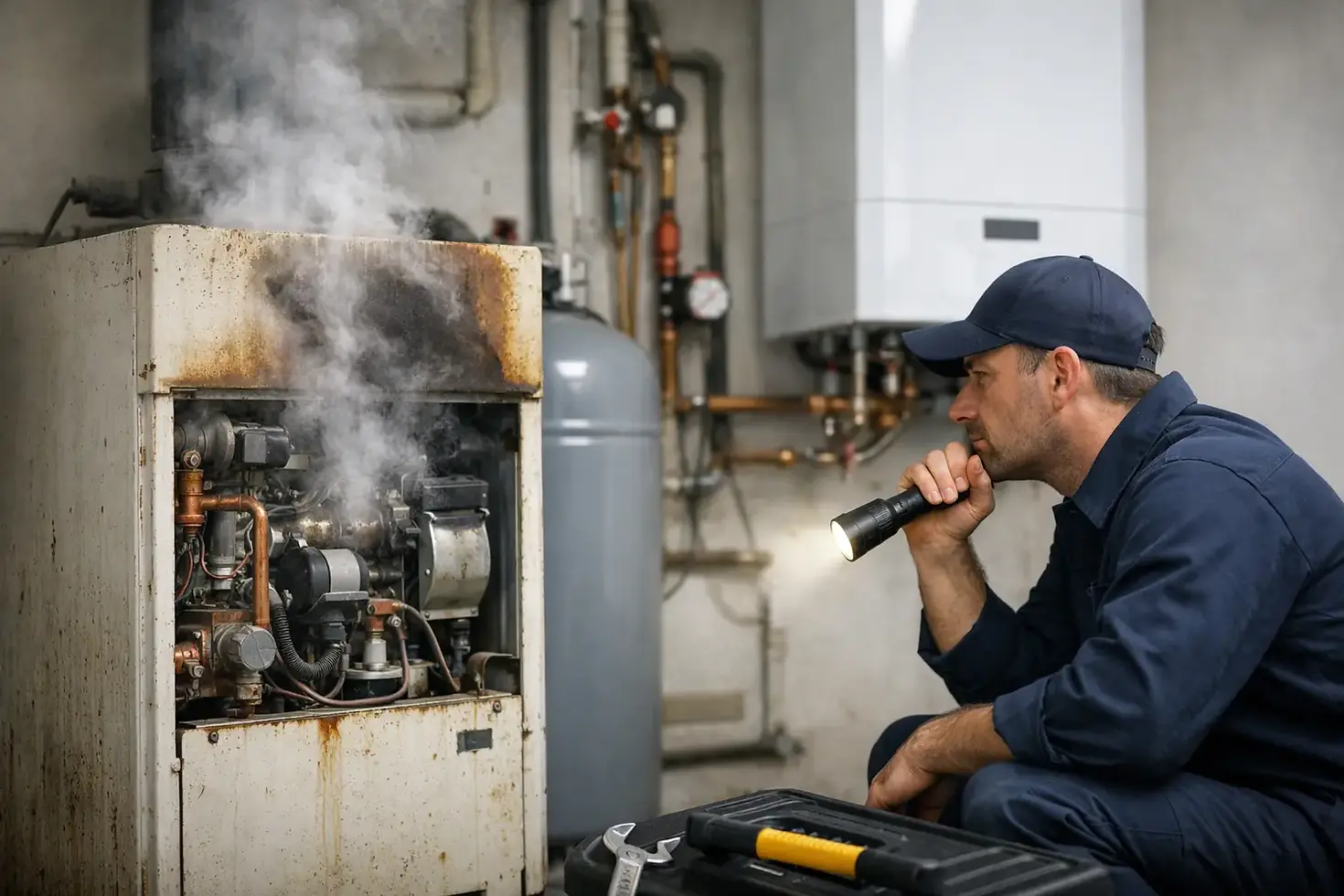
Unusual noises can also tell a story. Banging, whistling or gurgling may come from air, sludge or limescale issues, but they can also point to internal wear. The same goes for leaks, corrosion and visible rust around pipework or the case. These are not always instant replacement triggers, though they should never be ignored.
Boiler age matters, but it is not the whole story
People often ask for a simple cut-off point. Replace at 12 years. Replace at 15. In practice, it depends on the type of boiler, how well it was installed, whether it has been serviced properly and how hard it has worked over its life.
A boiler in a small, well-insulated house may age more gently than one serving a busy family home with high hot water demand. A neglected boiler can become unreliable much sooner than one that has been looked after every year.
There is also the question of what you have now. If you still have an older heat-only or back boiler setup, replacement may be about more than just avoiding breakdowns. It can be an opportunity to modernise the whole heating arrangement, free up space and improve control over heating and hot water. For some homes, moving to a modern condensing combi boiler is a practical upgrade rather than just a like-for-like swap.
When repair is still the sensible option
Not every older boiler should be removed. If the unit has been reliable, spare parts are still available and the fault is minor, repairing it can be the sensible route. The same applies if your boiler is relatively modern and the problem is clearly identifiable.
This is where honest advice matters. A good engineer should not push replacement where a fair repair will do the job. Equally, they should not keep patching an appliance that is likely to continue costing you money. The right answer is usually the one that gives you the least hassle and the best long-term value, not simply the cheapest short-term fix.
If you are planning other works in the home, timing also plays a part. For example, if a kitchen renovation or bathroom refit is already happening, it can make sense to deal with an ageing boiler or system upgrade at the same time. That can reduce repeat disruption and make the job more efficient overall.
When should a boiler be replaced for efficiency and home comfort?
Sometimes the boiler still works, but only just. That grey area is where many homeowners get stuck. If your heating bills are high, the house takes too long to warm up and you are getting inconsistent hot water, replacement can improve everyday comfort as well as efficiency.
Modern boilers are generally quieter, more efficient and better paired with current controls. If your existing setup is outdated, a replacement may give you more responsive heating, better use of space and lower running costs over time. The savings will vary depending on the age and type of the old boiler, so it is worth being realistic. A replacement should not be sold as a magic fix for every high energy bill. Insulation, controls and the condition of the wider system all matter too.
That wider system is important. In some homes, the boiler is only part of the issue. Sludged radiators, old pumps, expansion vessel faults or poor pipework design can all affect performance. A proper assessment looks at the full heating system, not just the box on the wall.
Safety, parts and compliance
Safety is another reason replacement may be recommended. Any concerns around combustion, flue condition or repeated fault codes should be taken seriously. While many issues can be repaired, there are cases where keeping an old boiler going is no longer wise.
Parts availability is often the tipping point. Once key components become obsolete or difficult to source, each breakdown becomes harder and slower to resolve. That is particularly frustrating for landlords, Airbnb hosts and households that cannot afford long periods without heating or hot water.
There is also the practical side of compliance and standards. New boilers and updated installations must meet current requirements, and a proper replacement gives you the chance to bring older pipework, controls and system design up to a better standard where needed.
How to decide without overpaying
If you are unsure whether to repair or replace, start with three questions. How old is the boiler? How often is it going wrong? And how much are you being asked to spend compared with the value of a newer, more reliable installation?
If the boiler is over 10 years old, has had multiple repairs and is now facing another expensive fault, replacement is often the more sensible choice. If it is younger, generally reliable and the issue is straightforward, repair may still be worthwhile.
It is also worth thinking beyond the boiler itself. Are you staying in the property for years to come? Are you planning renovations? Is the current setup right for the household, or are you managing with an old system that no longer suits the way you live? Those answers shape the decision as much as the latest fault does.
For homeowners in Manchester, Stockport and surrounding areas, getting a clear assessment from an experienced heating engineer can save a lot of stress. A practical installer will explain whether the issue is isolated, whether the system needs wider attention and whether replacement now is likely to save money and disruption later. That is the kind of straightforward advice we believe in at Heat Assist.
A boiler does not need to be completely dead before replacement becomes the right choice. If it is unreliable, inefficient or no longer suited to your home, acting before a full breakdown can put you back in control - and make winter a lot less stressful.


Comments