
How to Fit a Magnetic Filter on a Boiler
- Kayhan Mojganfar
- Jul 25
- 6 min read

If you have searched for how to fit magnetic filter equipment to your heating system, the reason is usually simple: you want to protect your boiler from the black sludge and fine metal debris that can build up inside pipework and radiators. A magnetic filter is a worthwhile addition to many UK central heating systems, particularly when a new boiler is being fitted to older radiators and pipework. It can help reduce the risk of circulating debris reaching sensitive boiler components, but it needs to be fitted in the right place and commissioned properly.
This is a job that may look straightforward from the outside. In practice, it involves draining part or all of the heating system, identifying the correct pipework, making reliable joints and restoring the system at the right pressure. If there is any uncertainty over the pipe layout, access or condition of the system, a qualified heating engineer is the sensible choice.
What a magnetic filter does
Central heating water should be clean, but over time oxygen, corrosion and limescale can create a dark deposit often called magnetite. This material travels around the system with the heating water. It can collect in radiators, restrict narrow waterways and contribute to faults in pumps, valves and the boiler heat exchanger.
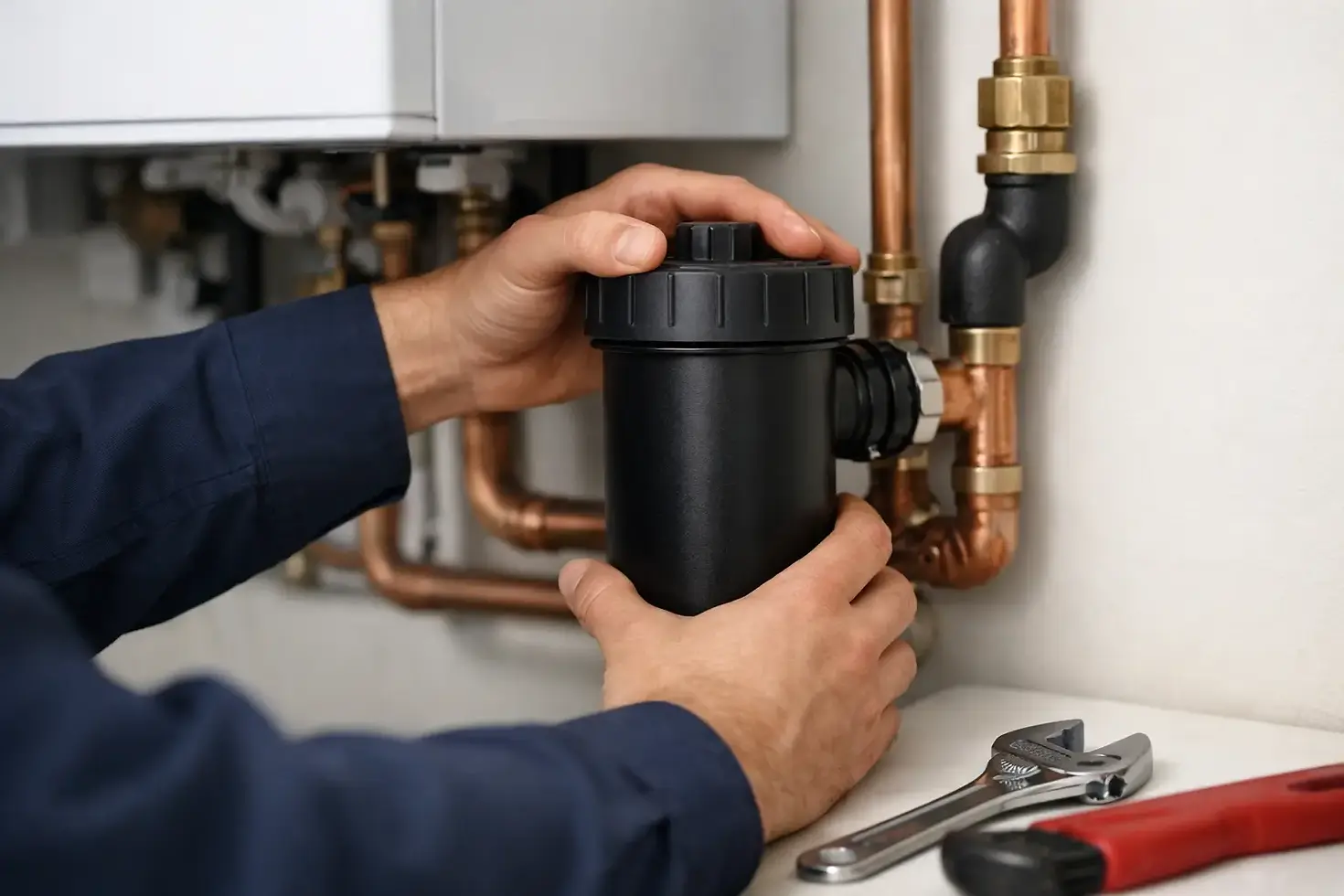
A magnetic filter is installed on the heating circuit and uses a powerful magnet to attract ferrous particles before they enter the boiler. Most models also have a chamber that catches non-magnetic dirt. During an annual service or system clean, the engineer can isolate the filter, remove the magnet and flush out the collected debris.
A filter is not a substitute for cleaning a badly contaminated system. If several radiators are cold at the bottom, the boiler has been noisy, or the water drained from the system is heavily black, a powerflush or targeted clean may be needed first. Fitting a filter afterwards helps keep the cleaned system in better condition.
Where to fit a magnetic filter
The usual position is on the central heating return pipe, immediately before the pipe enters the boiler. This gives the filter the best chance of catching debris before it reaches the boiler's internal components.
The exact layout depends on the boiler and pipework. On a combi boiler, the heating return is often one of the larger pipes below the appliance, but never assume based on position alone. Manufacturers' instructions and the boiler pipe labels should be checked. On a system boiler or conventional heating system, the return pipe may be less obvious, especially where there are zone valves, an external pump, a cylinder or a low-loss header.
The filter also needs to be accessible. There must be enough room to isolate it, remove the magnet and place a container below it when it is cleaned. Hiding it tightly behind a boiler casing, kitchen unit or boxing may make future servicing difficult and messy. A neat installation matters, but so does leaving practical service clearance.
Some filters can be fitted vertically or horizontally, while others have a preferred orientation. Follow the instructions supplied with the particular model, including any flow-direction arrow. The isolation valves supplied with the filter should be fitted so it can be serviced without draining the entire heating system again.
How to fit a magnetic filter safely
Before starting, check that the filter is suitable for the pipe size and heating system. Many domestic filters are designed for 22 mm pipework, though 15 mm and other connections are also used. A model may be supplied with compression fittings, push-fit connections or valves designed for a particular installation arrangement.
The boiler should be switched off and allowed to cool completely. Turn off electrical supplies at the fused spur, rather than relying only on the controls. Although fitting a filter does not normally involve working on the gas supply, work around a boiler still needs care. Do not remove the boiler case or interfere with sealed combustion components.
1. Isolate and drain the heating circuit
Close the boiler's heating flow and return isolation valves if they are fitted and working. Then drain enough water from the system to empty the section of pipe where the filter will be installed. Depending on the layout, this may mean draining through a drain-off point, opening a radiator bleed point or using the system's existing drain connection.
Be prepared for dirty water. Protect flooring and nearby cupboards, use suitable containers and have cloths ready. Older systems can release black water that stains quickly. If the system has inhibitor in it, avoid allowing drained water to run into places where it could cause damage.
2. Confirm the return pipe and plan the position
Measure carefully before cutting anything. Check that the filter body, valves and service cover will fit, and leave space underneath for maintenance. Make sure the chosen section is genuinely the central heating return, not a condensate pipe, cold mains pipe or hot water connection.
On a straightforward combi installation, the ideal location may be close to the boiler. However, pipework that is cramped, corroded or poorly supported can make this unsuitable. It is better to fit the filter in an accessible return section nearby than force it into a position where it cannot be maintained.
3. Cut the pipe and fit the valves
Once the pipe is drained and confirmed, cut out the required section cleanly. Deburr the pipe ends so they do not damage seals or restrict water flow. Fit the isolation valves and filter body in the direction shown by the manufacturer.
With compression fittings, use the correct olives and avoid overtightening. Too little tightening can cause a leak, but excessive force can distort fittings and create problems later. Where soldered connections are used, heat must be kept well away from the filter body, valves, seals and the boiler itself. This is one reason many homeowners prefer an engineer to complete the installation.
Support the surrounding pipework where necessary. A heavy filter should not be left hanging from unsupported copper pipe, particularly if it will be opened during future servicing.
4. Refill, vent and check for leaks
Close drain points, open the isolation valves and refill the heating system through the filling loop. Cold pressure for many sealed domestic systems is commonly around 1 to 1.5 bar, but always follow the boiler manufacturer's guidance. Bleed radiators as needed, then top the pressure up again.
Check every new joint carefully while the system is cold. Switch the boiler back on and run the heating. As the system warms, inspect the filter connections again. Small leaks sometimes appear only once pipework expands with heat.
Finally, make sure the filter valves are fully open, the boiler pressure remains stable and radiators heat evenly. If pressure repeatedly drops, there is water escaping somewhere or another fault needs attention. Do not keep topping up the system without finding the cause, as repeated fresh water can encourage further corrosion.
Add inhibitor after fitting the filter
A magnetic filter works best alongside the correct dose of central heating inhibitor. The filter catches debris already circulating, while inhibitor helps slow future corrosion inside radiators, pipes and boiler components.
If the system was drained significantly, the inhibitor level may need restoring. The amount depends on the system volume and the product instructions. This is also a good time to consider whether the water quality needs testing, especially after a boiler replacement or where there is a history of sludge-related faults.
For new boiler installations, manufacturers commonly expect the system to be cleaned, protected with inhibitor and fitted with suitable filtration. Meeting these requirements can be relevant to keeping the boiler warranty valid, so retain any commissioning records and service paperwork.
When fitting a magnetic filter is not a DIY job
A capable homeowner may be comfortable with basic plumbing, but the job becomes more involved where there is no obvious isolation, inaccessible pipework, old steel pipe, a sealed system with pressure issues or a complicated S-plan or Y-plan layout. The same applies if the boiler is due for replacement, has a fault code, or the heating water is heavily contaminated.
An engineer can identify the correct return route, fit the filter cleanly, clean the system where required and check that the boiler is operating properly afterwards. This can avoid a modest protection upgrade turning into a leak, loss of heating or boiler fault.
For homeowners in South Manchester and the surrounding areas, Heat Assist can fit magnetic filters as part of a boiler installation, heating upgrade or system clean. The practical benefit is not just the filter itself, but knowing the rest of the system has been checked and left ready for reliable use.
A magnetic filter is a small component with a useful long-term role. Fit it where it can protect the boiler, service it regularly, and deal with existing sludge rather than expecting the filter to solve every problem on its own.


Comments