
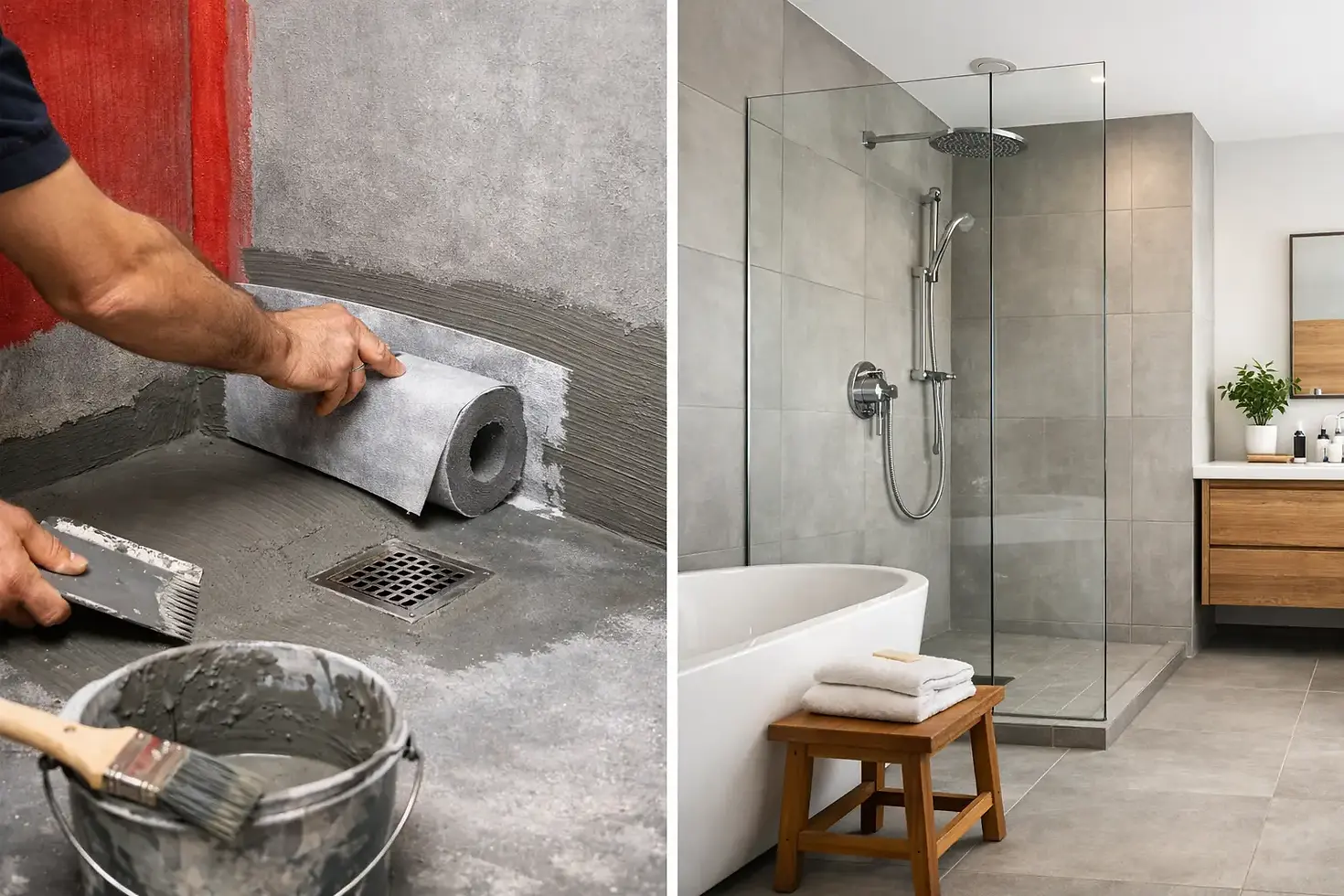
Guide to Bathroom Waterproofing Systems

A bathroom can look spotless on the surface and still be letting water into the structure behind it. That is why any proper guide to bathroom waterproofing systems needs to start with the hidden part of the job, not the tiles, taps or grout colour. If moisture gets past the finish and into floors or walls, the repair bill often grows far beyond the original bathroom budget.
For homeowners, landlords and anyone planning a bathroom refit, waterproofing is one of those details that is easy to overlook until something fails. The trouble is that by the time damp patches, loose tiles or swollen flooring show up, water has usually been travelling for a while. Good waterproofing is less about making a bathroom look finished and more about making sure it stays sound.
What bathroom waterproofing systems actually do
Bathroom waterproofing systems are designed to stop water penetrating the surfaces and joints that sit underneath your visible finishes. In most bathrooms, tile adhesive, grout and silicone are not the full waterproof layer. They help, but they are not a substitute for a proper system behind them.
A well-built system creates a barrier in areas exposed to regular splashing, pooling or steam. That usually means shower enclosures, wet room floors, bath surrounds, wall and floor junctions, pipe penetrations and any change of direction where movement and moisture tend to meet. In practical terms, the waterproofing protects plasterboard, timber, flooring, ceilings below and the wider building fabric.
This matters even more in older properties, where floors may have more movement and walls may not be ideally flat or moisture-resistant to begin with. It also matters in flats and rental properties, where a leak can quickly become somebody else’s problem downstairs.
The main types of bathroom waterproofing systems
In a guide to bathroom waterproofing systems, there is no single answer that suits every room. The right choice depends on the bathroom layout, the substrate underneath, whether you are fitting a standard bathroom or wet room, and how much exposure to water each area gets.
Liquid-applied membranes
These are common in domestic bathrooms. A liquid coating is applied to the prepared surface and cures into a flexible waterproof layer. They are often used on walls and floors in shower areas and around baths.
The main advantage is flexibility. Liquid systems can work well around awkward shapes, corners and penetrations. They are also widely used in bathroom refurbishments because they can be applied without dramatically increasing floor height. The trade-off is that they rely heavily on careful preparation, correct thickness and proper curing times. If rushed, they can fail.
Tanking sheets or membranes
Sheet membranes are fixed to the substrate to create a waterproof barrier. These are often used in wet rooms or higher-risk areas where a more controlled, uniform layer is preferred.
They can be very effective because the thickness is factory-set rather than dependent on someone applying enough liquid on site. The downside is that installation needs precision, especially at overlaps, corners and drains. They can also be less forgiving in tight or irregular spaces unless fitted by someone experienced.
Waterproof boards
Tile backer boards and other waterproof construction boards are commonly used in modern bathroom builds. These replace moisture-sensitive materials behind the tile finish and are often paired with taped joints and waterproof sealing products.
They are particularly useful in shower areas because they provide a more suitable base than standard plasterboard. They also help with stability, which matters because movement is one of the reasons tiled finishes crack over time. Even so, boards alone do not always mean the whole area is waterproof. Joints, fixings and transitions still need proper treatment.
Where waterproofing matters most
Not every part of a bathroom needs the same level of protection. That is where some confusion comes in. People often assume that if the room is tiled, the whole space is waterproof. It is not that simple.
Shower enclosures and walk-in showers
These are the highest-risk zones in most homes because water is being directed at walls and floors every day. In a walk-in shower or wet room, waterproofing is essential across the whole shower area and floor, not just where the obvious splashes land. Water travels, especially if falls are poor or the screen layout is minimal.
Around baths
If a bath has a shower over it, the wall protection becomes more important than in a bath-only setup. The corners, joints and the top edge where the bath meets the wall are common weak points. Silicone helps finish the connection, but the surface behind should still be suitable for wet use.
Floors and joints
Bathroom floors do not always see standing water, but they do see regular splashes, leaks from traps, drips from showering and the occasional overflow. Upper-floor bathrooms deserve particular care because failure can damage ceilings, electrics and decorations below. Floor-to-wall joints and penetrations for pipework are worth extra attention because they are common routes for water ingress.
Why tile and grout are not enough
This is one of the biggest misunderstandings in bathroom renovation. Tiles are a finish, not a guarantee. Grout is porous to some degree, and silicone is a maintenance item, not a permanent structural solution.
Over time, grout can crack, discolour or allow moisture through. Silicone can shrink, split or lose adhesion. If there is no proper waterproofing behind the finished surface, the bathroom is relying on materials that naturally age and move. That is risky, especially in family bathrooms that get daily use.
Common mistakes that lead to leaks
Poor bathroom waterproofing is not always about using the wrong product. Often, it comes down to the installation sequence and attention to detail.
One common mistake is waterproofing onto the wrong substrate. Standard plasterboard, damaged surfaces or poorly fixed flooring can undermine the whole system. Another is failing to reinforce corners and joints, which are the first places movement tends to show up. Drain connections are another weak point, especially in wet rooms, because the waterproof layer has to tie in properly with the drain body.
There is also the issue of rushing. Waterproofing products have curing times for a reason. If tiling starts too soon, or if the room is put into use before everything has properly set, the finish may look fine initially but be far more likely to fail later.
Choosing the right system for your bathroom
The right choice depends on how the room will be used. A small downstairs cloakroom with no shower has very different needs from a full family bathroom or a rental property shower room used every day.
For a standard bathroom with a shower over the bath, a combination of suitable backer boards and a waterproof membrane in the wet zones is often a sensible approach. For a walk-in shower or wet room, a more complete tanking approach across the floor and shower walls is usually the safer route. If the existing floor is uneven or deflects, that needs dealing with before waterproofing starts, because movement under tiles creates problems later.
This is also where professional planning adds value. Waterproofing should be considered alongside drainage, floor levels, tray or wet room former installation, extractor fan performance and the overall sequence of the bathroom fit. It is much easier to get right when the plumbing, preparation and finishing are all being managed as one coordinated job.
What UK homeowners should ask before work begins
You do not need to know every technical product name, but you should be clear on what is being installed and where. Ask what waterproofing system is being used in the shower area, what substrate is going behind the tiles, and whether the floor is being treated as well as the walls.
It is also worth asking how corners, joints and pipe penetrations will be sealed, and whether the room design includes any details that increase risk, such as a walk-in layout with limited screening. A good installer should be able to explain the plan in plain English, without trying to bury you in jargon.
If you are comparing quotes, be careful. A cheaper bathroom price can sometimes reflect missing preparation or minimal waterproofing. That saving disappears quickly if the job has to be repaired later.
Waterproofing as part of a quality bathroom installation
The best bathroom projects are not just about attractive finishes. They are about building the room properly so that the finish lasts. Waterproofing sits right at the centre of that. It supports the tiles, protects the structure and reduces the risk of hidden damage that can disrupt the rest of the home.
For customers having a full bathroom installation, this is one reason using a team that understands both plumbing and the wider build process can make life easier. The waterproofing needs to work with the pipework, drainage, floor build-up and final layout, not as an afterthought.
A bathroom should be easy to use, easy to maintain and built to cope with real daily life. If you are planning a renovation, treat waterproofing as one of the core parts of the project, because the bits you do not see are often the ones that matter most. Get that part right, and the whole room has a much better chance of staying dry, solid and trouble-free for years.


Comments