
Combi Versus System Boilers - Which Is Best?

A boiler can heat every room perfectly yet still leave a busy household frustrated at bath time. That is why the choice between combi versus system boilers should begin with how your home uses hot water, rather than simply replacing like for like.
A combi boiler is often an excellent, compact answer for smaller homes and modest hot water demand. A system boiler with a cylinder can be the better long-term choice where several people need hot water at once. Both can be efficient modern condensing boilers when correctly specified and installed. The right option depends on the property, the incoming water supply, available space and how your household actually lives.
Combi versus system boilers: the essential difference
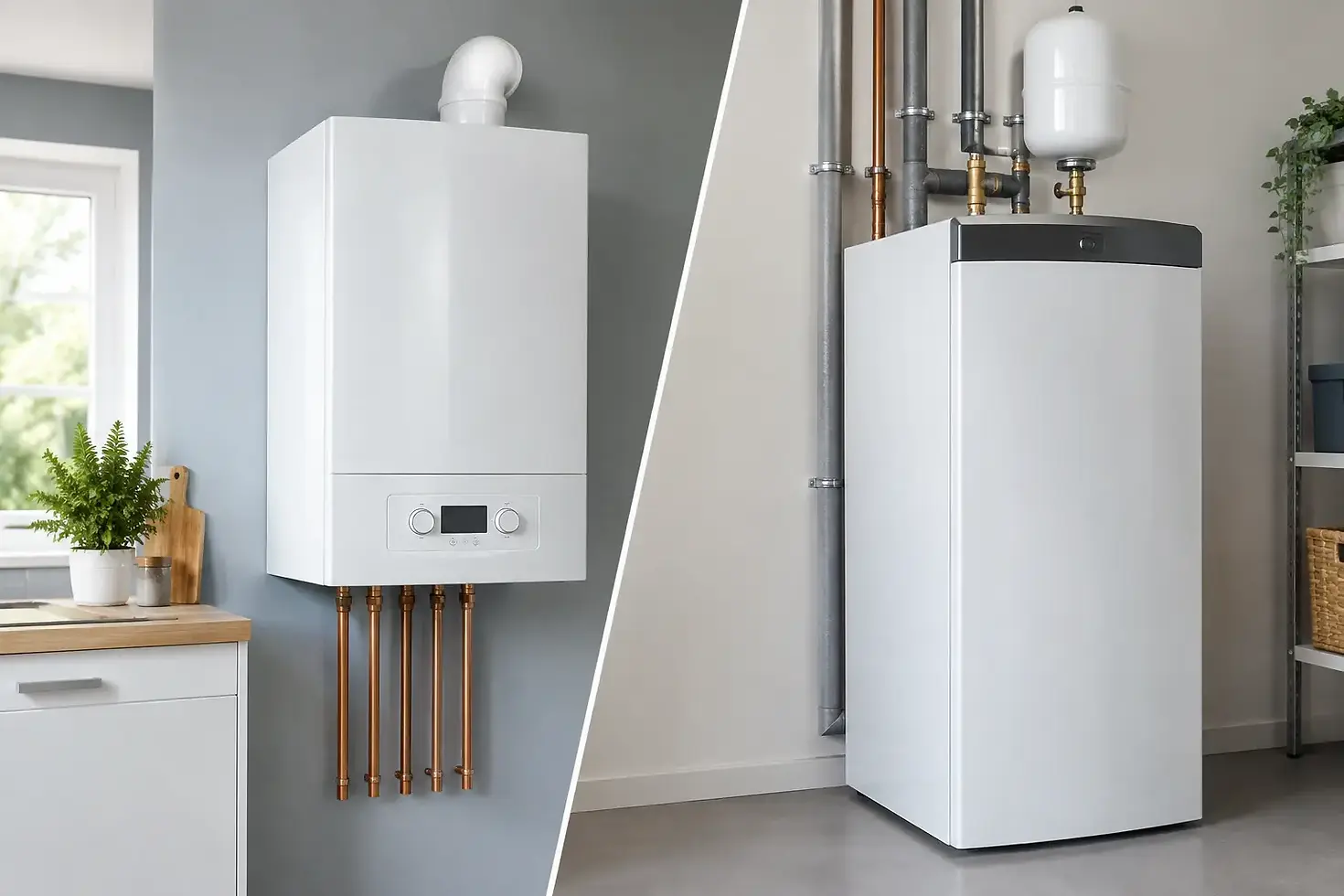
A combi, short for combination boiler, provides central heating and hot water from one wall-mounted unit. When you open a hot tap or start a shower, the boiler heats water directly from the mains as it flows through. There is no separate hot water cylinder and, in most cases, no cold-water storage tank in the loft.
A system boiler heats your radiators but stores domestic hot water in a separate cylinder, usually in an airing cupboard or utility area. The cylinder is heated and kept ready for use, allowing it to supply several outlets at the same time. Modern system boilers contain many key heating components within the boiler itself, which can make installation tidier than older heat-only arrangements.
This difference changes the experience of using hot water. A combi offers it on demand, while a system boiler provides a stored reserve.
When a combi boiler is the sensible choice
Combi boilers are popular for good reasons. They free up valuable space by removing a cylinder and often an old loft tank. For a flat, terrace or smaller family home, that reclaimed cupboard can be genuinely useful.
They also avoid the standing heat loss associated with storing a tank of hot water. If one or two people live in the property, with one main bathroom and perhaps an en-suite used occasionally, a correctly sized combi can deliver an efficient and straightforward setup.
A combi can be particularly suitable when replacing an ageing back boiler, conventional boiler or heat-only system. The conversion may involve removing redundant tanks and pipework, upgrading controls and bringing the heating system up to modern standards. It is not always a simple boiler swap, but the result can be a cleaner, more practical installation.
The main limitation is hot water flow. A combi needs a strong enough mains water supply to perform well. It also has a finite output. If someone is showering while another person runs a hot bath or uses a second shower, the flow can reduce and temperatures may become less consistent. A larger combi can improve performance, but it cannot create more incoming mains water pressure or flow than the property receives.
Where a system boiler has the advantage
A system boiler is often the better fit for larger homes, households with two or more bathrooms, and families with overlapping routines. The cylinder stores a useful volume of hot water, so it can supply a shower, basin and kitchen tap together with much less compromise than a combi.
This is especially valuable in homes with powerful showers, larger baths or regular morning demand. A cylinder can be sized around the household's needs, rather than relying solely on the boiler's ability to heat water instantaneously. A well-designed unvented cylinder can provide strong hot water pressure where the mains supply is suitable.
There are trade-offs. You need space for the cylinder, and the stored hot water must be heated in advance. Good controls, insulation and sensible scheduling reduce waste, but a cylinder-based system needs a little more planning than simply turning on a tap. Once the stored hot water is used, it may also need time to recover, depending on the cylinder size and boiler output.
For households planning a loft conversion, additional bathroom or growing family needs, retaining a system boiler can be wiser than fitting a combi simply because it appears smaller and cheaper at the outset.
The cylinder is not wasted space if demand is high
Homeowners sometimes see a hot water cylinder as outdated equipment to remove. Older cylinders and tanks can certainly be inefficient or troublesome, but the principle of stored hot water remains highly practical. A modern, well-insulated cylinder paired with the right boiler and controls is a reliable solution for a high-demand home.
It can also offer useful flexibility. Some cylinders can work with alternative heat sources or electric immersion heaters, providing a backup option if required. The details depend on the cylinder, controls and wider system design, so this should be discussed before installation rather than assumed.
Do not choose by bedroom count alone
Bedroom numbers offer a starting point, but they do not tell the full story. A three-bedroom home occupied by one couple may suit a combi perfectly. A two-bedroom property used by a family, with two showers running around the school run, may benefit far more from a system boiler and cylinder.
The more useful questions are practical ones. How many bathrooms are regularly used? Do showers run at the same time? Is there a large bath to fill? How many people live in the property now, and is that likely to change? Is there enough mains water flow for a high-output combi? Is losing an airing cupboard worthwhile?
An engineer should also assess the existing radiators, pipework, pump, expansion vessel, controls and system cleanliness. A new boiler cannot overcome poorly designed pipework, sludge in the system or inadequate water pressure. Sometimes the best value comes from improving the whole heating setup, not only changing the boiler on the wall.
Installation costs and disruption
A like-for-like combi replacement is usually the least disruptive route, particularly when the new boiler can remain in the same location and existing flue arrangements are suitable. Even then, the installation should include proper commissioning, system protection and clear controls guidance.
Changing from a cylinder system to a combi may cost more than expected. Tanks, cylinders and old pipework may need removal, hot and cold supplies may need altering, and the boiler location or flue route may need to change. Conversely, converting from a combi to a system boiler requires space for the cylinder and new pipework, so it is also a more involved project.
For either option, the installation should be carried out by a Gas Safe registered engineer. An unvented cylinder installation also requires the appropriate competency and safety provisions. Good workmanship matters because the boiler, controls, water supply and heating circuit must operate as one system.
If you are renovating a bathroom or kitchen, it is worth considering the heating design at the same time. Moving pipework, fitting a new shower or changing room layouts can affect hot water demand and access. Planning these works together can avoid reopening finished walls or cupboards later.
Efficiency is about design as well as the boiler
Most new gas boilers are high-efficiency condensing models, whether they are combi or system boilers. Their real-world performance, however, relies on correct sizing, good controls and a heating system that has been properly prepared.
An oversized boiler can short-cycle, switching on and off too frequently instead of running efficiently. An undersized boiler may struggle to meet heating or hot water demand. Weather compensation, programmable controls, thermostatic radiator valves and a clean, balanced system can make a noticeable difference to comfort and fuel use.
Cylinder systems should have effective insulation and controls that heat water at sensible times. Combi systems should be selected around genuine hot water flow requirements rather than the highest output on a brochure. These details are where experienced survey and installation work pays off.
Making the decision with confidence
A combi boiler is usually the practical choice when space is tight, hot water demand is moderate and the mains supply is strong. A system boiler is often the stronger choice where multiple bathrooms, simultaneous use and future household needs matter more than recovering a cupboard.
Neither is automatically better. The right boiler should suit your property for the years ahead, not just make the replacement quote look simpler today. A proper home survey gives you the chance to check water flow, discuss disruption and choose a setup that keeps mornings calmer, showers consistent and your heating dependable.


Comments